
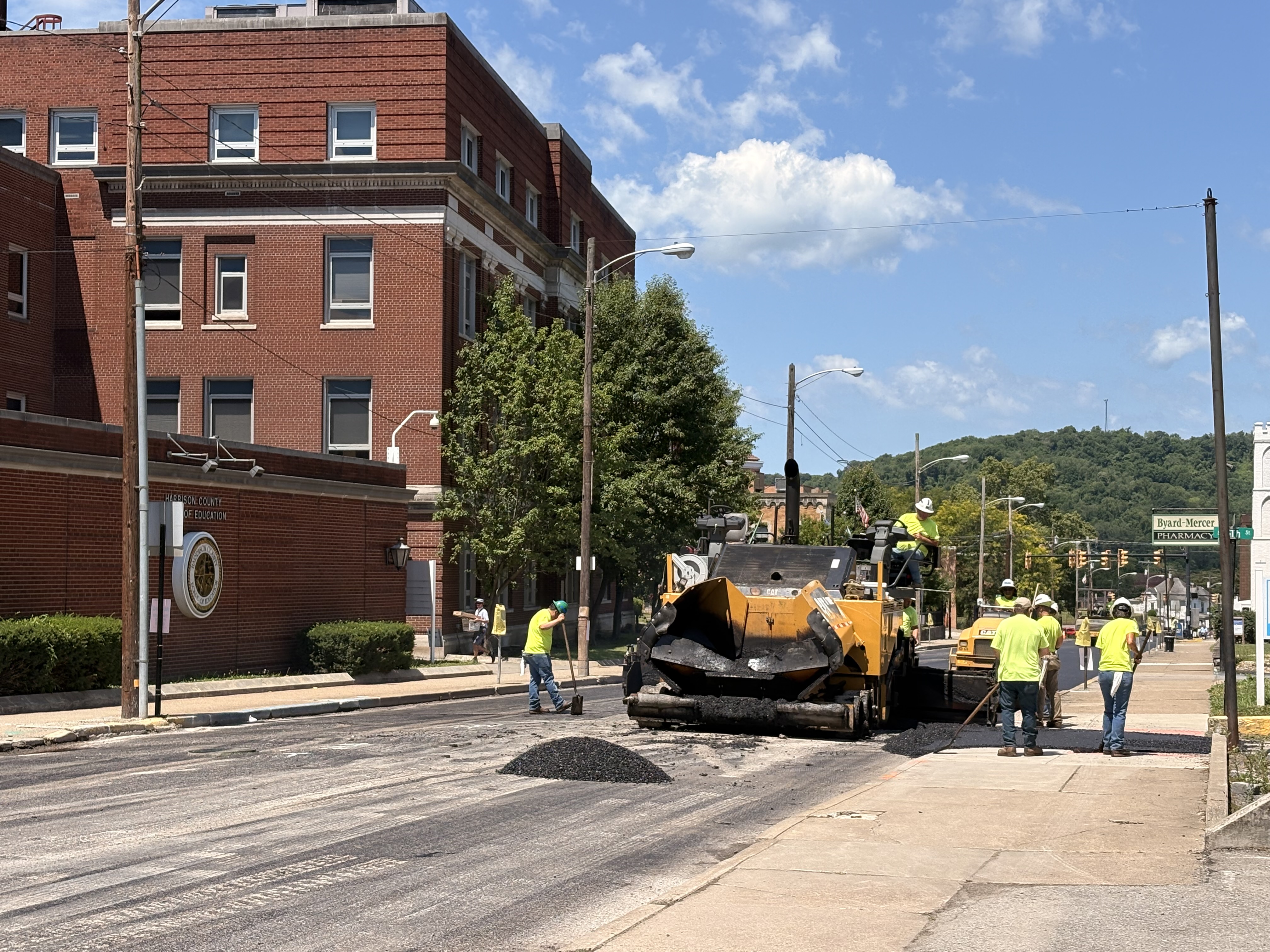
Clarksburg residents will soon see the final phase of a major infrastructure improvement effort as milling and paving operations began throughout the city following more than 15 months of utility upgrades and construction.
The paving work comes after an extensive infrastructure project that included the replacement of approximately 60,000 feet of lead service lines and other critical utility improvements across the city.
City officials say reaching the paving phase is a welcome milestone after more than a year of construction activity that affected neighborhoods, businesses and roadways throughout Clarksburg.
The project required coordination amongst contractors for the Clarksburg Water Board, Clarksburg Sanitary Board and Hope Gas, making it one of the most comprehensive infrastructure efforts undertaken in the state in recent years.
Officials noted the work represented what would traditionally be a five- to six-year infrastructure improvement program condensed into approximately 15 months. While the accelerated timeline created short-term disruptions, city leaders say it allowed critical upgrades to be completed years sooner than originally anticipated.
“Reaching the milling and paving phase means the disruptive, heavy lifting is successfully over, allowing the project teams to finally deliver on their promise of new water and natural gas infrastructure and restored, smoother streets for the community,” said Jason Lane, City Project Director.

Jason Lane, City Project Director
For residents who have experienced months of construction activity, traffic changes and utility work throughout the city, the beginning of roadway restoration signals that the project is nearing completion.
“It is an immense relief, because it marks the moment we shift from disrupting our community to restoring it. After enduring months of noise, detours, and torn-up streets, residents are finally seeing the reward for their patience,” Lane said.

Lane said, the accelerated schedule required extensive coordination among utility providers, contractors and regulatory agencies. While the pace created temporary disruptions, officials say it also produced significant long-term benefits.
“The accelerated timeline essentially asked the community and the crew to rip the Band-Aid off. It required a high tolerance for short-term chaos, but in return, it saved millions of dollars and successfully delivered safe water and gas infrastructure allowing the roadway to be restored on time with the West Virginia Division of Highway’s funding and contractor, which is Bear Contracting.”
As roadway restoration continues, residents should expect periodic traffic impacts in work zones throughout the city, Lane said.
“Residents can expect rolling lane closures, temporary parking restrictions, and potential detours as crews systematically mill and pave Main Street and Pike Street. The project appears to be on time, with a completion date at the end of July.”

Lane also said the project’s success extends beyond the visible roadway improvements and represents a long-term investment in critical infrastructure that will serve residents for decades.
“This project was more than just replacing underground pipes; it was a coordinated effort and investment in our community’s future between multiple utilities, contractors, and regulatory agencies. The residents of Clarksburg will not see the work was done, since it is underground, but will experience the benefits daily through a more reliable utility service. This project has been several years in the making, dating back to discussions during my previous employment with the WVDOH. It has been especially rewarding to join the City’s staff and have the opportunity to see the project come to fruition and ultimately be completed.”
As milling and paving operations move forward, officials ask residents to remain patient and watch for temporary traffic changes and work zones. The road restoration effort is expected to provide a smoother driving surface while completing the final stage of a project designed to improve Clarksburg’s water, sewer and natural gas infrastructure for decades to come.

Leave a Reply